Runway cable trap
The Dog StarsThe Runway cable trap transforms an airfield runway from a landing surface into a concealed weapon. Hig sees it only moments before touchdown, pulls the aircraft sharply back into the air, and later lands beyond it. Its near-invisibility makes the trap dangerous; its discovery also turns a long-held hope into a sense of betrayal.
Construction and Placement
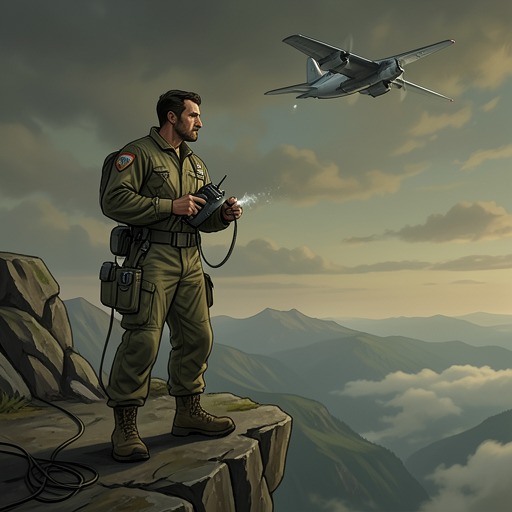
The cable spans the runway about a third of the way down, held roughly ten feet above the pavement by two spring-loaded arms welded from T-bar steel. The arms angle downward like the bills of herons, while the cable itself is painted black to blend with the tarmac. Hig catches sight of its shadow and the dark line of the wire as he looks through the aircraft’s low side window. The mechanism is simple but carefully positioned: taut across the landing path, it could strike an aircraft arriving low over the runway.
Discovery and Immediate Consequences
Hig is about thirty feet above the ground and preparing to flare for a soft landing when he notices the scorched, crumpled aircraft wrecks on the field. He jerks the yoke back and opens the throttle instead of landing. The cable springs into view beneath the aircraft, missing the wheels by about ten feet. Bangley gives him a rare approving thumbs-up, but the maneuver leaves little margin for another attempt: the fuel gauge shows only two gallons, at most ten minutes of flight.
Banking around for another look, Hig expects gunfire. Instead, he sees Pops with a gun raised, scanning the hangars and wreckage; Pops has moved a lamb out of the way. He identifies the cable as the attackers’ one major trick. With little fuel and no viable alternative, Hig makes another approach without pausing for his usual checks and touches down about a hundred feet past the wire. Pops directs him to taxi behind a building west of the tower.
Meaning in the Encounter
The trap’s camouflage makes the danger register first as a sudden visual shock, not as a threat Hig has time to reason through. The cable is easy to overlook against the runway, but once seen it changes the meaning of the entire field: the apparent landing place is an ambush site. Hig’s reaction is both practical and emotional. As he circles for the second landing, anger at the trap becomes entangled with his memory of a radio call that had given him hope for years; he experiences the scene as betrayal. The cable therefore marks not just a physical hazard but the point at which that earlier hope collides with the hostile reality of the airfield.